
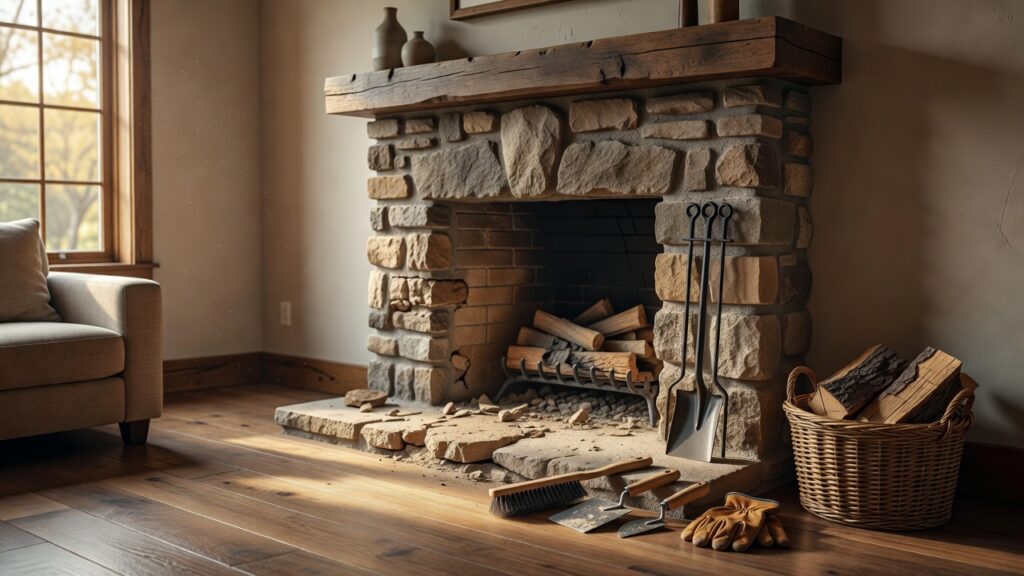
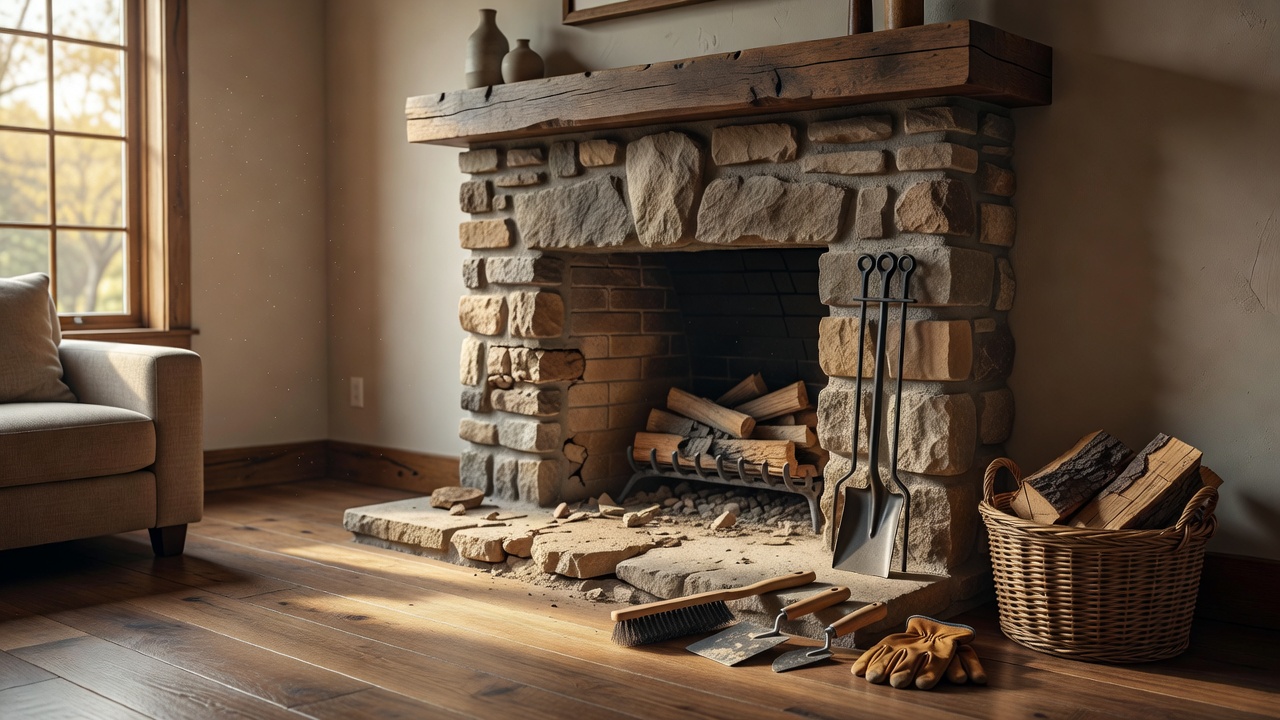
What’s Actually Wrong with Your Fireplace and What You Can Fix Yourself
Most homeowners in Barrington and Magnolia give their fireplace a quick look at the start of every season, see nothing obviously broken, and assume they’re ready to use it. The problem is that some important chimney and fireplace issues are not visible from the hearth. Knowing what you can safely check yourself and when you need a qualified chimney professional can help you address problems before they become more expensive or dangerous. This guide looks at common fireplace symptoms, what may be causing them, and when professional inspection or repair makes sense for homeowners in Barrington, Magnolia, and surrounding Camden County communities.
Smoke Backing Into the Room
Symptom: You light a fire, and smoke begins entering the living space instead of drafting up the chimney.
Likely causes: Several conditions can contribute to poor draft. Creosote buildup or another obstruction can restrict the flue. A cold chimney can also produce weak initial draft, particularly when the fireplace is located on an exterior wall. A damper that does not open completely can restrict airflow as well.
The fix: If the chimney is cold, some homeowners use a small amount of rolled newspaper near the open damper to help warm the flue before starting the fire. If smoke continues entering the room, stop using the fireplace and have the system evaluated.
A qualified chimney professional can inspect the damper, firebox, smoke chamber, and accessible portions of the flue. If an obstruction or suspected liner damage is found, additional inspection or cleaning may be necessary.
Prevention: Regular chimney inspection and cleaning when needed can help identify obstructions, creosote buildup, and other conditions before the heating season.
White Staining on the Exterior Masonry
Symptom: Chalky white streaks appear on the exterior chimney masonry, sometimes accompanied by deteriorating mortar.
Likely cause: This may be efflorescence, which occurs when moisture moves through masonry and carries soluble mineral salts toward the surface. It can indicate that water is entering through the chimney crown, flashing, mortar joints, or another part of the chimney system.
The fix: Light surface efflorescence can sometimes be gently cleaned with a brush and water. Cleaning the stain, however, does not address the source of the moisture.
If you see recurring staining, deteriorating mortar, cracked masonry, or other signs of water intrusion, have the chimney inspected. A professional can evaluate the crown, flashing, masonry joints, and other accessible areas to determine where water may be entering.
Avoid applying waterproofing products over deteriorated masonry without first addressing the underlying problem. The wrong product can interfere with the masonry’s ability to release moisture.
Prevention: Keep the chimney cap, crown, flashing, and masonry in good condition. A professional can determine whether a vapor-permeable masonry water repellent is appropriate for your chimney.
A Heavy Creosote Smell Even When the Fireplace Isn’t in Use
Symptom: A strong smoky or tar-like odor comes from the fireplace when it is not being used, particularly during humid weather.
Likely cause: Creosote deposits inside the flue can produce a noticeable odor, especially when humidity changes. Other conditions, including downdrafts or airflow problems, can also bring chimney odors into the home.
Creosote can vary from loose, flaky deposits to more stubborn glazed deposits. The more hardened the buildup becomes, the more difficult it can be to remove.
The fix: If you suspect significant creosote buildup, have the chimney evaluated rather than attempting aggressive cleaning without knowing the condition of the flue liner.
A professional sweep can determine whether the chimney needs routine mechanical cleaning or whether additional methods are appropriate for heavier deposits.
Prevention: Burn properly seasoned firewood and avoid repeatedly smoldering fires. Regular inspection and cleaning can help prevent excessive creosote accumulation.
Cracked or Spalled Firebox Tiles
Symptom: Refractory panels or firebrick inside the firebox have cracks, chips, or sections that appear loose or damaged.
Likely cause: Firebox materials experience repeated heating and cooling. Over time, this thermal cycling can cause refractory panels and firebrick to crack or deteriorate.
Small surface cracks do not necessarily mean that the entire firebox needs to be rebuilt. The significance depends on the location, depth, size, and condition of the surrounding materials.
The fix: Do not assume that a crack can simply be filled with a hardware-store repair product. A qualified technician should determine whether the damaged component can be repaired or needs replacement.
Replacement refractory panels must be compatible with the fireplace and properly installed. If the firebox has significant damage or exposed structural components, discontinue use until it has been evaluated.
Prevention: Regular inspections can identify deteriorating refractory materials before the damage becomes more extensive.
Animals or Debris in the Flue
Symptom: You hear scratching or chirping from the chimney, notice debris falling into the firebox, or see nesting material near the damper.
Likely cause: An uncapped or damaged chimney can provide access for birds and other animals. Debris can create an obstruction that interferes with proper venting.
Some bird species, including chimney swifts, are protected under federal law. If you suspect an active nest, do not attempt to remove it yourself without determining whether the species or nest is legally protected.
The fix: Do not light a fire to try to force animals or nesting material out of the chimney. Have the obstruction assessed and removed appropriately.
Once the flue is clear, a properly sized chimney cap can help prevent animals, leaves, and other debris from entering again. The cap should be selected based on the actual chimney configuration rather than simply choosing a generic size.
Prevention: Have the chimney cap checked periodically for corrosion, damage, and proper fit.
The Damper Is Stuck or Doesn’t Seal
Symptom: The damper handle is difficult to operate, the damper will not fully open, or cold air enters through the fireplace when the damper is supposed to be closed.
Likely cause: Dampers can become difficult to operate because of corrosion, accumulated debris, warped components, or damaged hinges and mechanisms.
A damper that does not open fully can affect fireplace draft. A damper that does not close properly can also allow unwanted airflow through the chimney when the fireplace is not being used.
The fix: You can visually check the damper from inside the firebox and see whether the mechanism moves. Remove only loose debris that is safely accessible.
If the damper is seized, damaged, or warped, have it evaluated by a chimney professional. Depending on the fireplace, the repair may involve adjusting or replacing the existing damper. In some cases, a top-sealing damper may be considered as an alternative.
Prevention: Include damper operation in your regular fireplace inspection routine and have problems addressed before the heating season.
What You Can Safely Check Yourself
There are several basic maintenance tasks homeowners can reasonably handle:
- Remove cooled ash from the firebox using an appropriate metal container.
- Visually check the firebox for obvious cracks or loose materials.
- Test whether the damper opens and closes.
- Look for obvious debris or nesting material without reaching into an unknown obstruction.
- Inspect the chimney cap from the ground.
- Photograph visible cracks, stains, or masonry deterioration so you can track changes.
- Confirm that your home’s smoke and carbon monoxide alarms are working.
The important distinction is between observing a problem and repairing it.
You can document a cracked firebox panel. That does not mean you should replace it without determining the correct material.
You can see white staining on the chimney. That does not tell you exactly where the water is entering.
You can notice a damaged damper. That does not mean the mechanism is safe to disassemble yourself.
When the problem involves the flue liner, chimney structure, smoke chamber, roofline, or combustion venting, professional evaluation is the safer choice.
Barrington and Magnolia Homeowners: Here’s What to Do Now
Many fireplace problems are easier and less expensive to address when they are identified early. A visual check from the hearth can catch obvious problems, but it cannot reveal everything happening inside the flue or above the roofline.
If your fireplace has been unused for more than a season, you have noticed smoke entering the room, or you cannot remember when the chimney was last professionally inspected, consider scheduling an evaluation before using it again.
Barrington Chimney serves Barrington, Magnolia, Haddon Heights, Lawnside, and surrounding Camden County communities. Contact us to schedule an inspection and learn what condition your fireplace and chimney are actually in.
A quick check can tell you what you can see. A professional inspection can help identify what you can’t.
Related from Barrington Chimney: Chimney Sweep in Barrington · Chimney Sweep in Barrington · Fireplace Cleaning in Barrington, NJ
Our services
Chimney Inspections · Chimney Cleaning & Sweeping · Chimney Sweep in Barrington Safe Fires Start with a Clean… · Chimney Sweep in Barrington · Chimney Sweep in Barrington · Chimney Sweep in Barrington, NJ
Areas we serve
Barrington, NJ · Barrington, NJ · Barrington, NJ · Barrington, NJ · Barrington, NJ