
What Barrington Homeowners Get Wrong About Chimney Sweeping
Many homeowners assume a chimney sweep is something you call only when you smell smoke or see obvious soot. That assumption can leave important chimney problems undiscovered.
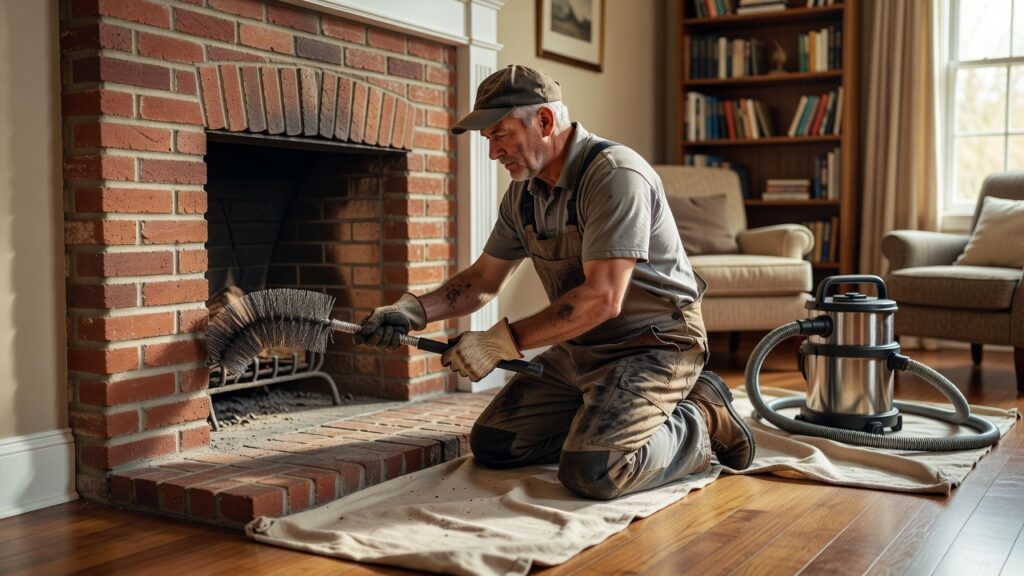
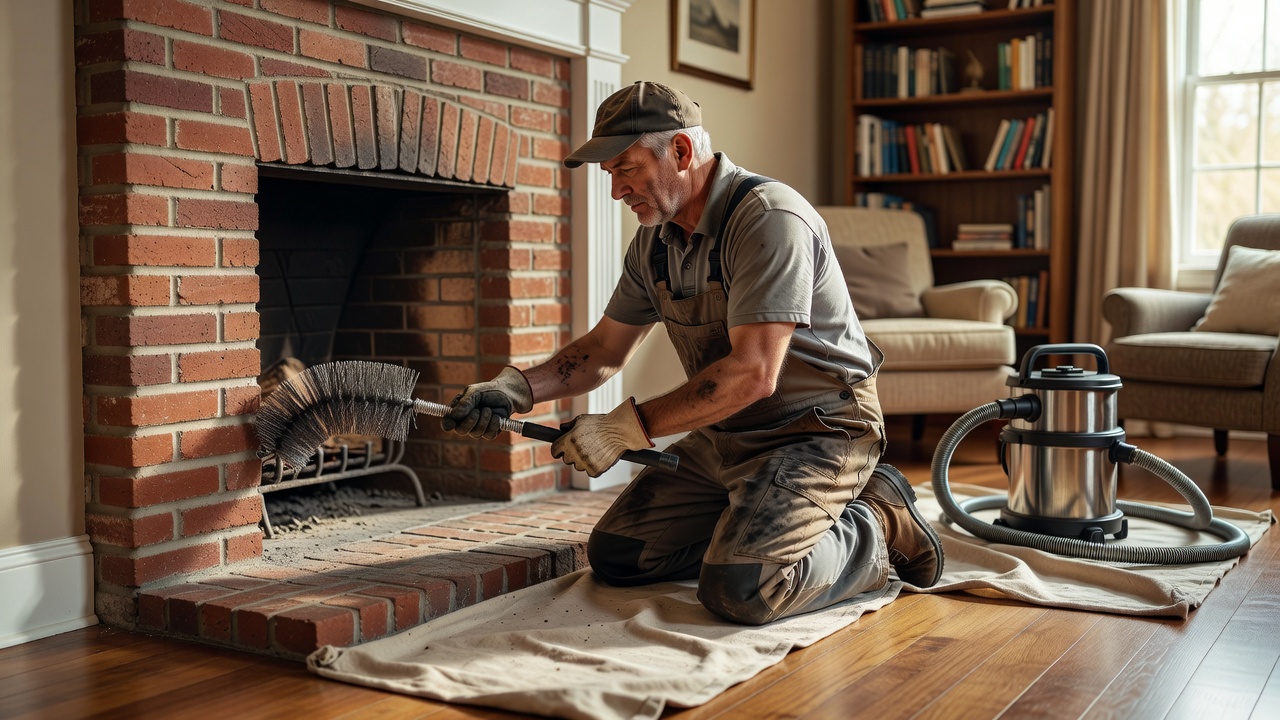
Chimney sweeping in Barrington, NJ is not simply about making the fireplace look cleaner. A proper chimney service can identify creosote buildup, obstructions, masonry deterioration, liner damage, and other conditions that may affect how safely the chimney operates.
The key is knowing what annual inspection actually means, when cleaning is necessary, and what a professional chimney sweep should examine.
Thinking a Clean-Looking Fireplace Means a Safe Chimney
A clean-looking firebox does not necessarily tell you what is happening higher inside the chimney.
Creosote and other deposits can accumulate in the flue, smoke chamber, or other portions of the venting system that are not visible from the hearth. Obstructions and structural problems can also be hidden from view.
That is one reason CSIA follows NFPA 211 guidance recommending that chimneys, fireplaces, and vents be inspected at least once a year. The purpose is not simply to look for soot. An inspection can identify deposits, obstructions, deterioration, and other conditions that may affect safe operation.
Annual inspection does not automatically mean annual sweeping.
CSIA recommends cleaning masonry fireplaces when sooty buildup reaches approximately 1/8 inch or sooner when glaze is present. The appropriate cleaning frequency depends on how the fireplace is used, the type of fuel burned, installation characteristics, and burning practices.
Believing You Can Do the Sweeping Yourself With a Brush Kit
Chimney brushes can remove some loose deposits, but sweeping and inspecting a chimney are not exactly the same job.
A proper chimney service involves evaluating the accessible portions of the system as well as removing deposits when cleaning is necessary.
A professional may examine the firebox, damper, accessible flue, chimney exterior, cap, crown, and other components depending on the type of system and inspection being performed.
The condition of the deposits also matters. CSIA notes that standard brushing is effective for soot and ordinary creosote but has limited effectiveness against hard glaze deposits. Mechanical cleaning methods may be needed for harder deposits, and CSIA advises that these methods should be handled by professionals familiar with the equipment.
That means a homeowner’s brush kit should not be treated as a substitute for professional inspection.
DIY cleaning can also leave a homeowner unaware of problems such as damaged flue tiles, obstructions, deteriorated masonry, or other conditions that are not obvious from the fireplace opening.
Assuming Annual Sweeping Is Overkill If You Rarely Use the Fireplace
This is one of the most important distinctions homeowners should understand.
Annual inspection does not necessarily mean annual cleaning.
CSIA follows NFPA guidance recommending annual inspection even when a chimney is not heavily used. Animals can enter chimneys, moisture can contribute to deterioration, and other problems can develop while a fireplace is sitting unused.
Cleaning frequency depends on the amount of buildup and the characteristics of the fireplace and chimney.
Burning seasoned wood and maintaining appropriate burning practices can help reduce creosote formation, while burning poorly seasoned wood or operating a fire improperly can contribute to greater deposits.
The best way to determine whether cleaning is necessary is to have the chimney inspected rather than relying on an arbitrary number of fires per season.
Treating Chimney Cap and Crown Damage as Cosmetic
A damaged chimney cap or deteriorated crown may look like a relatively minor exterior issue.
It is not something homeowners should automatically ignore.
The chimney is exposed to weather throughout the year. Damage at the top of the chimney can allow moisture to enter areas that are intended to remain protected.
Moisture intrusion can contribute to deterioration of masonry and other chimney components over time.
A missing or damaged cap can also leave the chimney vulnerable to debris and animal entry. CSIA specifically recommends chimney caps as a way to help keep debris and animals out of the chimney.
If you see cracked masonry, a deteriorated crown, missing mortar, or a damaged cap, have the condition evaluated before assuming it is merely cosmetic.
Assuming All Chimney Sweeps Provide the Same Service
Not every chimney service visit has the same scope.
Homeowners should ask exactly what is included before scheduling.
CSIA recommends considering a CSIA Certified Chimney Sweep when choosing a professional. Certification requires testing on chimney safety, fire codes, clearances, and standards relating to chimney and venting systems.
You should also ask:
- Is an inspection included?
- What inspection level is being performed?
- Will the accessible chimney components be examined?
- Will deposits be removed if cleaning is necessary?
- Will the technician identify visible masonry or liner problems?
- Will you receive documentation of the findings?
- Are recommended repairs explained separately from routine cleaning?
A cleaning and an inspection are related services, but they are not interchangeable.
Understanding the Difference Between Inspection Levels
Another misconception is that every chimney automatically receives a Level 2 inspection.
That is not the case.
The appropriate inspection level depends on the circumstances. A Level 1 inspection is generally used when the basic conditions of the chimney system are known and there are no indications that a more extensive inspection is necessary.
A Level 2 inspection is more comprehensive and can include examination of accessible portions of the chimney interior using appropriate equipment.
The need for a Level 2 inspection depends on the circumstances and applicable inspection standards. It should not be described as automatically required after every home sale or weather event.
If a chimney has undergone a significant change, suffered damage, experienced a chimney fire, or has conditions that cannot be adequately evaluated through a Level 1 inspection, ask the chimney professional whether a more extensive inspection is appropriate.
Don’t Ignore Creosote Buildup
Creosote is one of the primary reasons wood-burning chimneys require regular attention.
It can appear in different forms, including loose deposits and harder or glazed material.
CSIA explains that standard chimney brushing works well for soot and ordinary creosote but has limited effect on glaze. Professional mechanical methods or chemical treatment may sometimes be appropriate for difficult deposits.
The important point is that homeowners should not rely on appearance alone.
If you see significant deposits or are unsure when the chimney was last cleaned, schedule an inspection.
Don’t Ignore Smoke or Odors
Smoke entering the living space is not something to work around.
Possible causes include an obstruction, damper problem, draft issue, or another condition affecting the chimney system.
Similarly, persistent chimney odors can have multiple causes, including deposits and moisture-related conditions.
CSIA notes that chimney inspections can identify conditions that may contribute to chimney fires or carbon monoxide intrusion.
If smoke is entering the room or you suspect a chimney blockage, stop using the fireplace until the problem has been evaluated.
What Should You Expect From a Professional Chimney Sweep?
A professional visit should begin with understanding the chimney and fireplace system rather than simply starting the brush.
Depending on the system and scope of service, the technician may evaluate:
- Firebox
- Damper
- Accessible flue
- Smoke chamber
- Chimney cap
- Crown
- Exterior masonry
- Visible liner conditions
- Creosote or soot deposits
- Possible obstructions
If cleaning is necessary, the technician can select an appropriate cleaning method based on the type and amount of deposits.
CSIA’s homeowner guidance describes standard brushing and more specialized mechanical cleaning methods for different deposit conditions.
After the service, ask the technician to explain what was found and whether any repair or additional inspection is recommended.
When Should Barrington Homeowners Schedule Service?
The safest approach is not to wait until smoke, odors, or visible damage force you to make an appointment.
If you use a wood-burning fireplace, schedule an inspection at least annually and have the chimney cleaned whenever the inspection shows that cleaning is necessary.
It is also worth arranging an inspection if:
- You have not used the fireplace in a long time.
- You recently purchased the home.
- You notice visible masonry deterioration.
- The chimney cap is missing or damaged.
- You suspect an animal has entered the chimney.
- Smoke enters the room.
- You notice significant creosote buildup.
- You suspect the chimney has experienced a fire.
- The fireplace or connected appliance has been changed.
Taking care of these issues before the first cold-weather fire gives you time to address problems without rushing.
Schedule Chimney Sweeping in Barrington, NJ
A chimney does not have to look dirty from the living room for it to need attention.
The most important problems can be inside the flue, around the chimney top, or in components that homeowners rarely examine.
Barrington Chimney serves Barrington and surrounding Camden County communities with chimney cleaning and inspection services.
If you are unsure when your chimney was last inspected or cleaned, contact a qualified chimney professional and ask what your system needs.
Annual inspection is the baseline. Cleaning and repairs should follow the condition of the chimney.
Areas we serve
Barrington, NJ · Barrington, NJ · Barrington, NJ · Barrington, NJ · Barrington, NJ