
How to Get Your Chimney Liner Repaired in Barrington, NJ (A First-Timer’s Guide)
If you have never dealt with a damaged chimney liner before, the process can feel overwhelming. You may not know what questions to ask, what the repair involves, or whether the contractor providing the estimate is giving you accurate information. This guide walks you through every stage, from determining whether you have a liner problem to scheduling the repair and understanding typical pricing in Camden County.
Before You Start: What You Should Know About Chimney Liners
Your chimney liner is the clay, metal, or cast in place material that lines the inside of your flue. It performs two important functions. It helps contain combustion gases so they vent safely outside the home, and it protects the surrounding masonry from excessive heat and corrosive combustion byproducts.
NFPA 211 requires that masonry chimneys serving fuel burning appliances be lined with an approved liner that is properly installed and maintained. When a liner cracks, deteriorates, or develops gaps, combustion gases, including carbon monoxide, may leak into areas of the home, and excessive heat may be transferred to nearby combustible materials.
Most homes in Barrington, Haddon Heights, Lawnside, and surrounding South Jersey communities were originally built with clay tile chimney liners. These liners often last for decades but can deteriorate because of repeated heating and cooling cycles, moisture intrusion, normal aging, and structural movement.
Older homes in Pennsauken or Collingswood that have been converted from oil to high efficiency gas appliances may also require chimney liner upgrades because cooler flue gases can produce excessive condensation that accelerates deterioration of masonry and mortar joints.
Step 1: Look for the Warning Signs
You do not need to climb onto the roof to suspect a chimney liner problem.
Begin by inspecting the firebox for white staining, broken clay tile fragments, or persistent smoky odors when the fireplace is not being used.
Outside the home, look for white mineral deposits known as efflorescence, deteriorated mortar joints, or water staining below the chimney crown.
Although these signs do not confirm chimney liner damage by themselves, they indicate that a professional chimney inspection is warranted.
If you recently installed a new furnace, boiler, water heater, fireplace insert, or gas appliance and no one discussed the condition of your chimney liner, be sure to mention this when scheduling your inspection.
Step 2: Schedule a Level 2 Inspection
Before any chimney liner repair is recommended, a thorough inspection should be completed.
If there has been a change in the heating appliance, suspected damage, or another condition requiring additional evaluation, NFPA 211 may call for a Level 2 inspection.
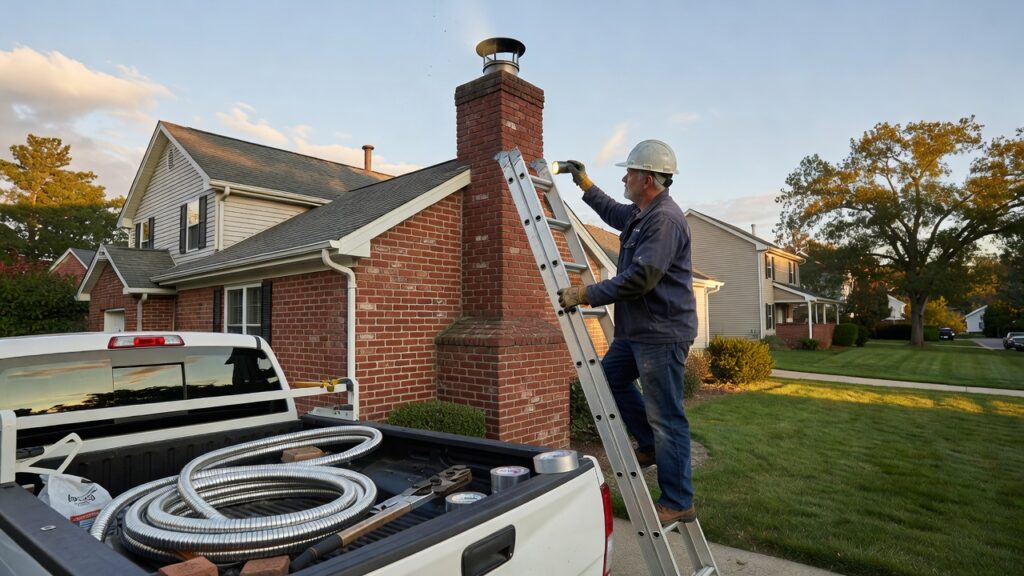
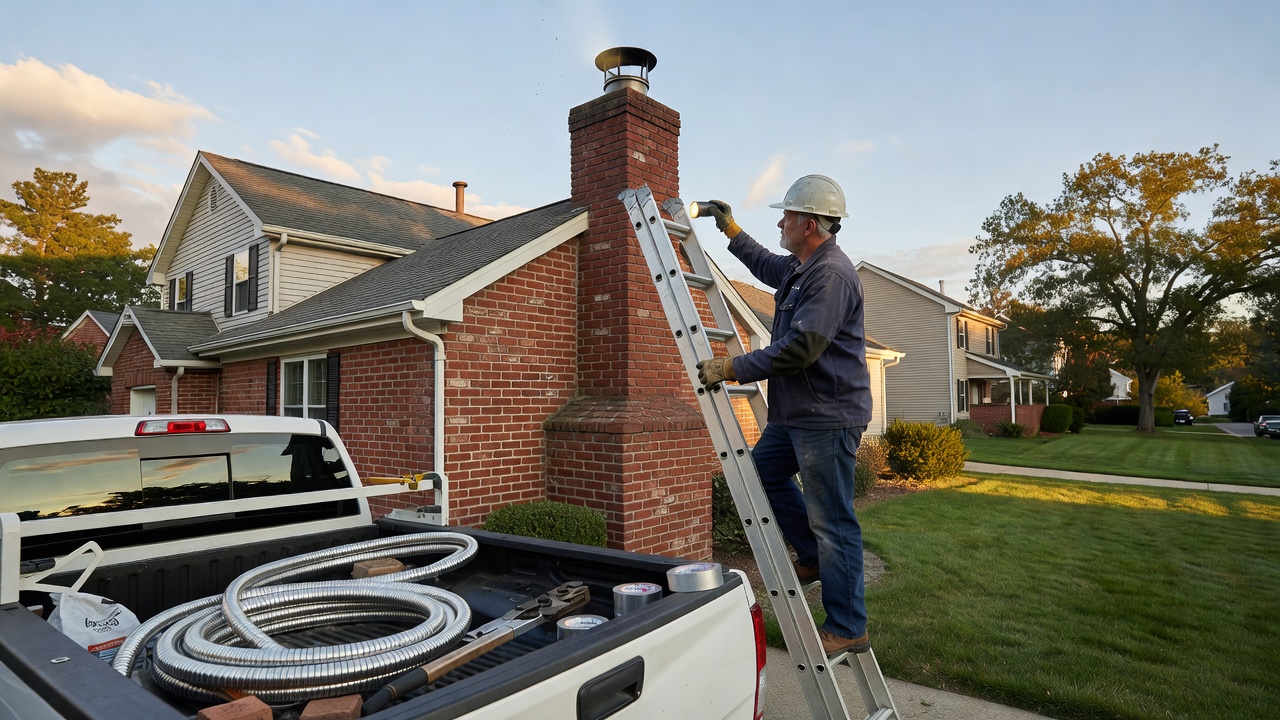
A CSIA certified chimney professional may use specialized video scanning equipment to inspect the full length of the flue and identify cracks, gaps, or deterioration that cannot be seen during a basic visual inspection.
When contacting a chimney company in Barrington, ask whether they perform video inspections and provide a written inspection report with photographs.
Barrington Chimney provides written inspection reports along with photographs documenting any findings.
Step 3: Understand Your Chimney Liner Repair Options
After the inspection, the technician will recommend the repair method that best matches the condition of your chimney.
Stainless Steel Chimney Liner Installation
This is one of the most common repair options for severely damaged clay tile liners or when venting requirements change because of a new gas, oil, or wood burning appliance.
A stainless steel liner is installed from the appliance or fireplace connection to the top of the chimney. When properly sized and installed, it provides excellent durability and meets modern code requirements.
Cast in Place or Ceramic Resurfacing Systems
When the existing clay tile liner remains structurally sound but mortar joints have deteriorated, certain listed resurfacing systems may restore the flue without requiring a complete replacement.
This option is often appropriate for older masonry chimneys when recommended by the inspection findings.
Partial Chimney Liner Repair
If damage is limited to one section of the liner, localized repairs may be possible. This option is appropriate only after a thorough inspection confirms that the remainder of the liner is in good condition.
Your chimney professional should explain the advantages, limitations, and expected lifespan of each repair option based on your specific chimney and heating appliance.
Step 4: Get a Written Estimate
Before approving any repair, request a detailed written estimate.
The estimate should include:
- Liner material
- Liner diameter
- Liner length
- Chimney cap and top plate, if included
- Estimated labor time
- Warranty information
- Permit requirements, if applicable
Helpful questions to ask include:
- Is this chimney liner listed for my heating appliance and fuel type?
- Will any required permits be obtained?
- What does the warranty cover?
- Is chimney liner insulation recommended for my installation?
Permit requirements vary by municipality throughout New Jersey. Your contractor should explain whether permits are required for your specific project.
Step 5: Prepare Your Home
Chimney liner installation typically takes between one half day and one full day, depending on the repair method and the condition of the chimney.
Before the technicians arrive:
- Clear the area around the fireplace or heating appliance.
- Remove fragile decorative items.
- Keep pets in another area of the home.
- Ensure technicians have access to the roof and any utility room where the appliance is located.
Professional chimney companies use protective coverings and HEPA filtered vacuum systems to minimize dust during the repair.
Step 6: Review the Completed Work
Once the repair is complete, ask the technician to explain what was installed.
For stainless steel liner installations, verify that the liner is properly connected, the chimney cap and top plate have been installed correctly, and all work has been completed according to the manufacturer’s installation requirements.
Request copies of the manufacturer’s warranty information and retain your inspection report for future reference.
If permits were required, confirm that the final inspection has been completed before closing the project.
Step 7: Schedule Regular Inspections
Even after the chimney liner has been repaired, annual inspections remain important.
The Chimney Safety Institute of America recommends annual inspections for chimneys, fireplaces, vents, and solid fuel burning appliances to help identify developing issues before they become expensive repairs.
Regular maintenance also helps maximize the lifespan of your chimney liner.
Troubleshooting Tip
If you receive estimates that vary significantly in price, compare the details instead of focusing only on the total cost.
Differences often involve the quality of the liner, insulation materials, warranty coverage, permit costs, or the amount of labor included.
A detailed written estimate makes it much easier to compare companies fairly.
What Does Chimney Liner Repair Cost in South Jersey?
In Barrington and throughout Camden County, stainless steel chimney liner installation generally ranges from $1,800 to $4,500, depending on chimney height, liner diameter, accessibility, and installation complexity.
Listed resurfacing systems may cost a similar amount, while localized repairs are generally less expensive when they are appropriate.
Because chimney liners are a critical safety component, it is important to choose a qualified contractor based on experience, documentation, and workmanship rather than price alone.
Schedule Your Chimney Inspection Today
If you live in Barrington, Haddon Township, Stratford, Gibbsboro, or anywhere in Camden County and suspect your chimney liner may be damaged, or if your chimney has not been professionally inspected in several years, Barrington Chimney is here to help.
Our CSIA certified technicians provide thorough chimney inspections, detailed written reports, and honest recommendations so you can make informed decisions about your home’s safety.
Contact Barrington Chimney today to schedule your chimney inspection or request an estimate.