
Published November 4, 2026
Gas Fireplace Service in Barrington, NJ: What Homeowners Get Wrong
A gas fireplace can appear to work normally while still needing maintenance. The pilot may light, the burner may produce a flame, and the remote may respond, but those signs do not confirm that every component is operating correctly.
For homeowners in Barrington, NJ, understanding how gas fireplace maintenance works can help prevent avoidable problems and identify issues that need professional attention. From burner cleaning to venting inspections, the right service depends on the appliance type, its condition, and the manufacturer’s maintenance instructions.
Here are common questions and misconceptions about gas fireplace service.
Does a Gas Fireplace Need Annual Service Even If It Works Fine?
Quick answer: Many manufacturers recommend annual maintenance by a qualified technician, even when the fireplace appears to work normally.
Gas fireplaces do not produce creosote like wood-burning fireplaces, but they still have components that can collect dust, deteriorate, or develop operating problems. Depending on the model, these may include the burner, pilot assembly, ignition system, glass gasket, controls, and venting components.
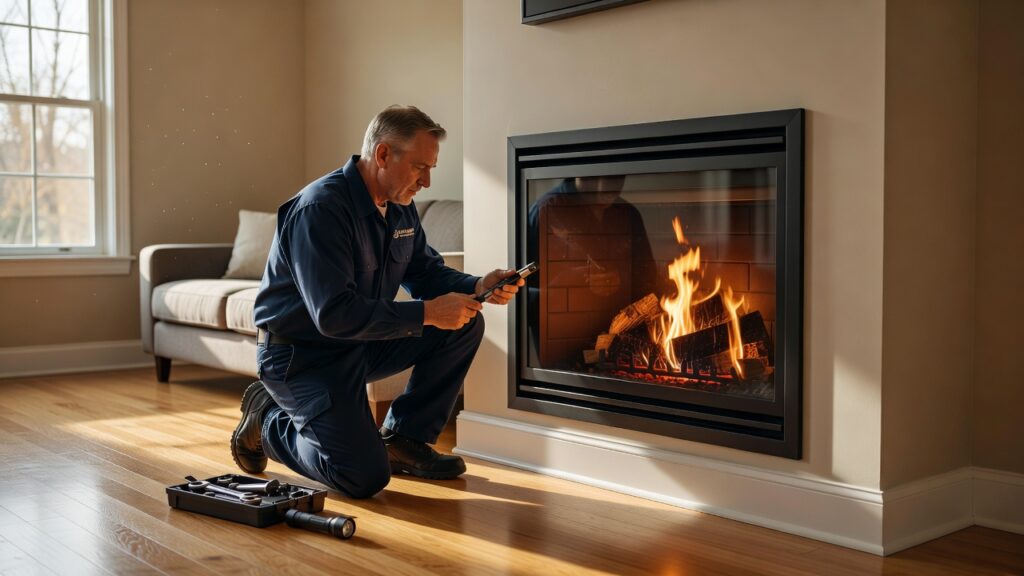
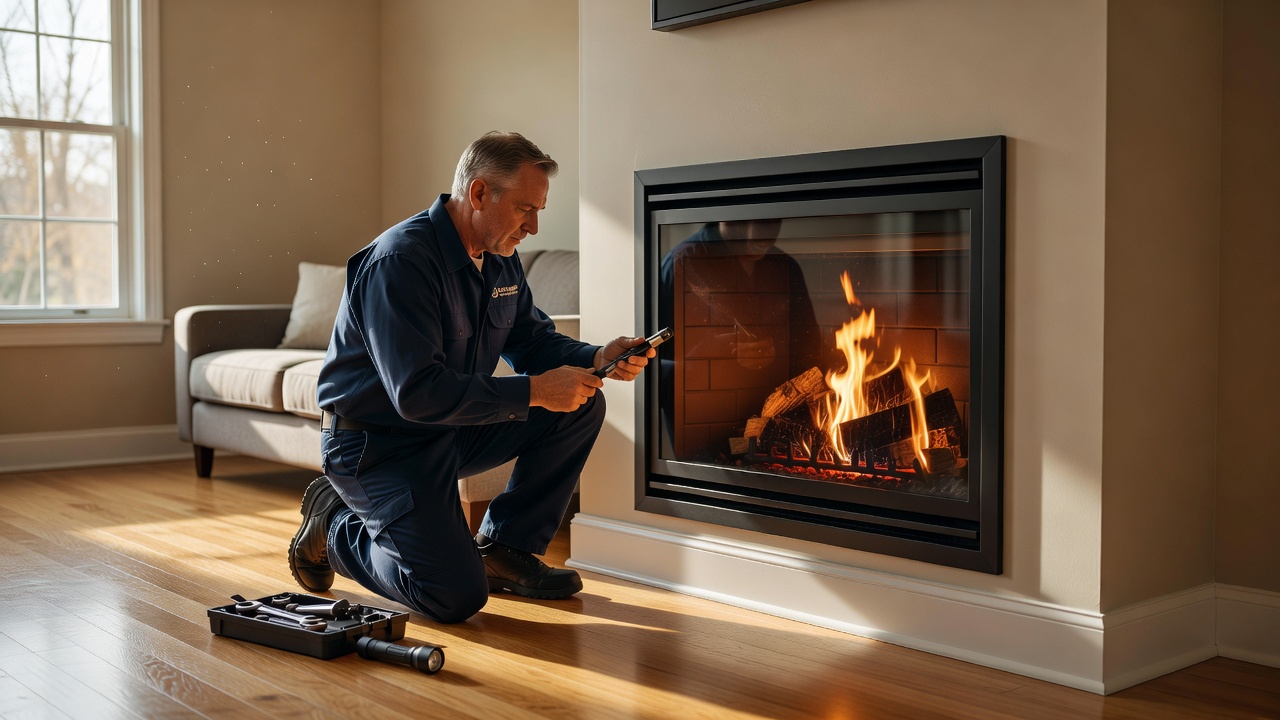
The manufacturer’s maintenance instructions should determine which checks and cleaning procedures are appropriate. A qualified technician may inspect the burner and pilot assembly, look for damaged components, check the glass and gasket, and evaluate the venting system.
NFPA 54 includes guidance for inspecting existing gas appliance installations, but it should not be described as a blanket annual-service requirement for every gas fireplace. Some manufacturers specifically require yearly maintenance, so homeowners should check their appliance manual.
What Happens During a Gas Fireplace Service Visit?
Quick answer: A service visit may include checking the burner, ignition system, glass assembly, controls, and venting, depending on the appliance.
Gas fireplace maintenance is not identical for every model. A direct-vent fireplace, a B-vent appliance, and a vent-free unit have different operating and inspection requirements.
A service appointment may involve:
-
Burner inspection: Checking for visible damage, debris, or blocked burner ports.
-
Pilot and ignition inspection: Evaluating the pilot assembly and ignition components according to the manufacturer’s instructions.
-
Gas control evaluation: Checking accessible controls and operating components for proper function.
-
Glass and gasket inspection: Looking for damaged glass, deteriorated seals, or other conditions that could affect the appliance’s operation.
-
Venting inspection: Checking accessible vent components and the exterior termination for obstructions, damage, or deterioration.
-
Log and ember placement: Confirming that decorative logs and ember materials are positioned according to the manufacturer’s instructions.
-
Operational testing: Running the appliance and evaluating its operation after any approved maintenance.
The technician should explain what was inspected, identify any problems, and discuss recommended repairs before performing additional work.
Not every service appointment includes the same procedures. The appliance’s manufacturer, model, venting configuration, and condition determine the appropriate scope.
What Mistakes Do Barrington Homeowners Make With Gas Fireplace Maintenance?
Quick answer: Common mistakes include skipping maintenance, blocking vent openings, and attempting repairs without understanding the appliance.
Several maintenance habits can create unnecessary problems:
Ignoring maintenance because the pilot stays lit. A working pilot does not confirm that the burner, glass seal, venting, and other components are in good condition.
Blocking the vent termination. Landscaping, mulch, leaves, and other debris should not obstruct the manufacturer’s required clearances around a vent termination. Keep the area clear and follow the appliance manual.
Assuming a remote control is the entire system. Replacing remote batteries may solve a simple control problem, but it does not address issues involving the ignition system, gas valve, wiring, or burner.
Handling ceramic logs incorrectly. Decorative logs and ember materials are designed for specific positions. Moving them without following the manufacturer’s instructions can affect the flame pattern and may contribute to improper operation.
Using household cleaning products on the glass. Gas fireplace glass requires appropriate cleaning products and procedures. Some manufacturers specify particular cleaners and warn against abrasive materials.
If you are unsure how to maintain your appliance, ask a qualified technician to explain which tasks are appropriate for homeowners and which should be left to a professional.
How Can You Tell If Gas Fireplace Venting Has a Problem?
Quick answer: Persistent odors, unusual soot deposits, visible vent damage, or changes in operation should be investigated rather than ignored.
Gas fireplace problems do not always produce obvious warning signs. However, homeowners should pay attention to changes such as:
-
Persistent or unusual odors during operation.
-
Excessive soot or unexpected discoloration on the glass or logs.
-
A pilot that repeatedly goes out.
-
A burner that does not operate as described in the manufacturer’s instructions.
-
Visible damage or obstruction around the vent termination.
-
Unusual changes in flame appearance or appliance performance.
Some visual characteristics, including flame color, vary by appliance design. A yellow or orange flame is not automatically evidence of a malfunction. The manufacturer’s instructions provide the appropriate operating reference.
Carbon monoxide is colorless and odorless. A carbon monoxide alarm is an important household safety measure, but it does not replace professional appliance maintenance.
If your carbon monoxide alarm sounds, leave the building and contact emergency services from a safe location. Do not reenter until authorities say it is safe. If you smell gas, avoid operating electrical switches or creating ignition sources, leave the area, and contact the gas utility or emergency services from outside.
NFPA 720 is no longer the current standalone CO alarm standard. Its provisions were moved into NFPA 72, the National Fire Alarm and Signaling Code.
Can You Clean a Gas Fireplace Yourself?
Quick answer: Some basic exterior cleaning may be appropriate, but gas components and internal maintenance should follow the manufacturer’s instructions and be handled by a qualified professional when required.
Homeowners can generally take care of simple tasks such as:
-
Dusting accessible exterior surfaces.
-
Keeping the area around the fireplace clear.
-
Checking that the exterior vent termination is not visibly obstructed from a safe location.
-
Cleaning the glass only when the appliance is cool and using a manufacturer-approved product and procedure.
More involved work should be left to a qualified technician. This includes disassembling the burner, adjusting gas controls, servicing the pilot assembly, changing log placement, and working on gas piping or vent components.
Before cleaning the inside of the fireplace, consult the appliance manual. Some models require specific shutdown procedures, and removing glass or decorative components incorrectly can create safety or operating problems.
How Often Should a Gas Fireplace Be Serviced in New Jersey?
Quick answer: Check the manufacturer’s maintenance schedule. Many manufacturers recommend annual service by a qualified technician.
A yearly appointment is a practical maintenance schedule for many gas fireplaces, especially when the manufacturer calls for annual inspection and cleaning.
Scheduling before the heating season can give homeowners time to address any problems before regular use begins. However, maintenance should not be delayed if the fireplace develops an unusual odor, repeated ignition problems, visible damage, or another concerning symptom.
If your fireplace has not been serviced for several years, consult the manual and arrange an evaluation before returning it to regular use.
What Do Gas Fireplace Repairs Cost, and What Affects the Price?
Quick answer: The cost depends on the appliance, the problem, parts availability, and the work required.
There is no single repair price that applies to every gas fireplace in Barrington. A routine maintenance appointment is different from replacing a gas valve, repairing an ignition system, or correcting a damaged venting component.
Factors that can affect the estimate include:
-
The make, model, and age of the fireplace.
-
The type of problem and the components involved.
-
Whether replacement parts are readily available.
-
The venting configuration and accessibility.
-
The labor required for diagnosis and repair.
-
Whether additional work is needed to restore proper operation.
Older fireplaces may require parts that are difficult to source or no longer manufactured. In those cases, a technician may need to discuss repair options alongside replacement considerations.
Ask for a written estimate that separates inspection or service charges, parts, labor, and any additional recommended work before authorizing repairs.
Is a CSIA-Certified Technician Necessary for Gas Fireplace Service?
Quick answer: Relevant training and qualifications matter. CSIA and NFI credentials serve different purposes, and homeowners should ask about experience with their specific appliance.
The Chimney Safety Institute of America (CSIA) provides professional education and certification for chimney and venting work. The National Fireplace Institute (NFI) offers certification programs for hearth professionals, including gas hearth systems.
For gas fireplace service, ask whether the technician has training and experience with the specific appliance type and venting arrangement in your home. A credential alone does not establish that someone is qualified or authorized to perform every type of gas-related repair.
New Jersey also has specific licensing rules for work involving gas piping associated with hearth appliances. State regulations require the appropriate license for installing, improving, repairing, or maintaining this piping. Homeowners should confirm that anyone performing this work has the required qualifications.
What Happens If a Gas Fireplace Goes Without Service for Several Years?
Quick answer: Dust, component wear, damaged seals, or venting problems may go unnoticed until the appliance develops an operating issue.
Over time, dust and debris can accumulate around the burner and pilot assembly. Components may deteriorate, electrical connections may develop problems, and glass gaskets may lose their condition.
The actual condition of a fireplace cannot be determined from its age or maintenance history alone. Some appliances may need only routine cleaning, while others may require replacement parts or additional evaluation.
If your fireplace has been unused for several years, arrange an inspection before putting it back into regular operation. A qualified technician can evaluate the appliance and explain whether maintenance or repairs are needed.
What Should You Ask Before Booking Gas Fireplace Service?
Quick answer: Ask about qualifications, appliance experience, service inclusions, and repair pricing.
Before scheduling an appointment, consider asking:
-
Does the technician have experience with my fireplace’s make and model?
-
Do you service direct-vent, B-vent, or vent-free gas fireplaces?
-
What does the service appointment include?
-
Are cleaning, inspection, and operational testing included?
-
Will I receive a written summary of the findings?
-
Are replacement parts and additional repairs charged separately?
-
Does the technician hold the relevant credentials and licenses for the work being performed?
Clear answers can help you understand what the appointment covers and avoid unexpected charges.
Schedule Gas Fireplace Service in Barrington, NJ
A gas fireplace needs appropriate maintenance even when it appears to work normally. Checking the burner, ignition components, glass assembly, and venting according to the manufacturer’s instructions can help identify problems before they interrupt regular use.
Barrington Chimney serves Barrington and surrounding Camden County communities, including Runnemede, Lawnside, Haddon Township, and Cherry Hill.
If your gas fireplace has not been serviced recently or you have noticed a change in its operation, contact Barrington Chimney to ask about service availability and the work involved. Ask whether an inspection or service appointment is available for your particular fireplace model.
Serving your area: For related services in nearby communities, see Roselle Chimney and Haddon Heights Chimney.
Related from Barrington Chimney: Chimney Sweep in Barrington — Safety-First Service from a Crew That Kn · Chimney Sweep in Barrington Safe Fires Start with a Clean Flue · Chimney Sweep in Barrington
Areas we serve
Barrington, NJ · Barrington, NJ · Barrington, NJ · Barrington, NJ · Barrington, NJ