
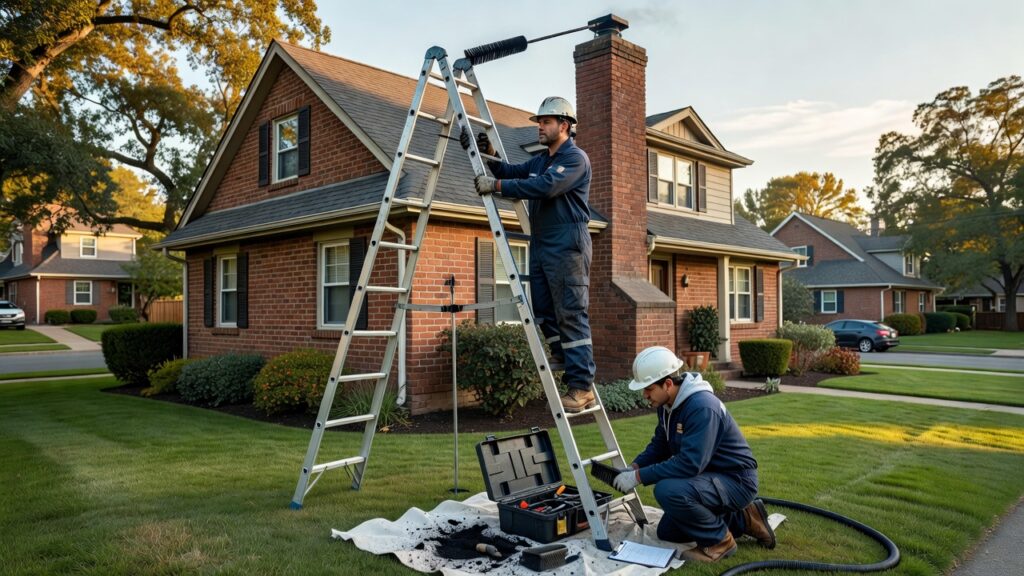
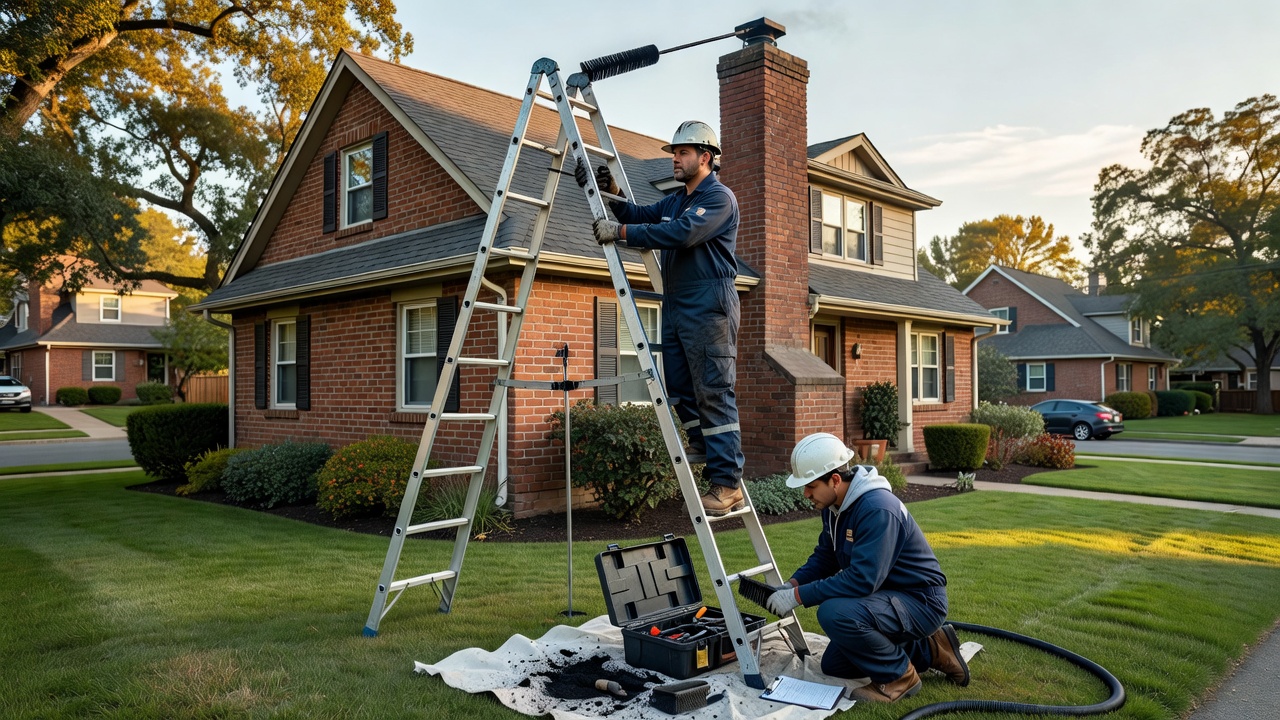
What Chimney Cleaning Costs in Barrington and Bellmawr, NJ and What the Price Really Means
When homeowners in Barrington or Bellmawr compare chimney cleaning quotes, the lowest price is not always the most useful number. A chimney cleaning can involve more than brushing the flue. The technician may also identify creosote buildup, damaged components, airflow problems, animal debris, or other conditions that affect how the chimney operates.
The important question is not simply, “How much does a chimney sweep cost?” It is, “What does the quoted service actually include?” Understanding the difference can help you compare estimates without assuming that every higher-priced service is better or that every inexpensive service is inadequate.
What Determines the Cost of Chimney Cleaning?
There is no reliable single price that applies to every chimney in Barrington or Bellmawr.
The cost can vary depending on the appliance, chimney configuration, accessibility, condition of the flue, amount and type of deposits, and whether additional inspection or repair work is needed.
A straightforward cleaning of an accessible chimney with ordinary soot deposits is different from a chimney with heavy glazed deposits, difficult access, animal debris, or suspected damage.
That is why a responsible estimate should be based on the actual chimney rather than a generic price advertised online.
Be cautious with articles that present one local price range as though it were an official market standard. Prices change over time, and the scope of service can vary significantly between companies.
Problem 1: Heavy or Glazed Creosote
Creosote can accumulate in chimneys serving wood-burning appliances. Its characteristics can vary from loose deposits to harder or glazed material.
A strong odor from the fireplace, visible dark deposits, or poor draft can justify having the chimney evaluated. These symptoms do not automatically prove that glazed creosote is present, however.
The cleaning method should be appropriate for the deposits found.
A standard mechanical cleaning may be sufficient for ordinary soot and loose deposits. More difficult deposits can require additional mechanical methods or other techniques selected by the technician.
Homeowners should also remember that chemical products do not replace proper mechanical cleaning.
The best prevention is proper operation of the appliance, appropriate fuel, adequate airflow, and regular inspection and maintenance.
Problem 2: A Damaged or Deteriorated Flue
A chimney can have problems that are not obvious from the fireplace opening.
Cracked flue components, deteriorated masonry, or other damage may require a more detailed inspection than a routine cleaning.
However, a Level 2 inspection is not automatically required every time a chimney has a problem or receives a repair.
The appropriate inspection level depends on the circumstances.
The current NFPA 211 framework distinguishes Level 1, Level 2, and Level 3 inspections. A Level 1 inspection covers readily accessible portions of the chimney and is associated with routine conditions. A Level 2 inspection expands the scope and includes accessible areas such as attics, crawl spaces, and basements, along with internal inspection by video scanning or another appropriate method. Level 2 is used when conditions warrant a more extensive evaluation, such as certain changes in the appliance or conditions that may affect chimney suitability.
If a technician suspects a damaged liner, ask what was observed and why a particular inspection level is being recommended.
A cleaning cannot repair a damaged liner.
Problem 3: Damper Problems
The damper is an important part of a traditional fireplace.
A damper that is stuck, damaged, heavily corroded, or unable to operate correctly can affect fireplace operation.
Homeowners may notice poor draft, difficulty opening or closing the damper, or unusual airflow when the fireplace is not in use.
A technician can inspect accessible damper components and determine whether cleaning, adjustment, or replacement is appropriate.
Do not assume that every draft problem requires a new top-mounted damper. Draft can be affected by several factors, including chimney configuration, appliance operation, house pressure, and weather.
A proper diagnosis should come before recommending a replacement component.
Problem 4: Crown, Cap, and Masonry Deterioration
Water is one of the major concerns for masonry chimneys.
Cracked masonry, deteriorated mortar, damaged flashing, and problems with the chimney crown or cap can allow moisture to enter areas that should remain protected.
Warning signs can include:
- White staining on exterior masonry
- Crumbling mortar
- Cracked masonry
- Water staining near the chimney
- Damaged chimney cap
- Visible deterioration around the crown
- Moisture-related damage in accessible areas
These conditions should not automatically be blamed on one specific mortar mix or a particular number of freeze-thaw cycles.
The right repair depends on what is actually damaged.
A technician may recommend masonry repair, crown repair, flashing work, waterproofing, or another remedy after evaluating the chimney.
And while roof access can be useful when the scope requires an exterior inspection, homeowners should not assume that every chimney cleaning automatically includes a complete roof inspection.
Ask what areas are included in the quoted service.
Problem 5: Birds and Other Animals
Animals can enter an improperly protected chimney.
Homeowners may hear scratching or chirping, see debris in the fireplace, or notice that a damper is difficult to operate.
Chimney swifts deserve special attention because they are protected migratory birds. The U.S. Fish and Wildlife Service states that chimney swifts are protected under the Migratory Bird Treaty Act and that their eggs and nests are protected.
That means homeowners should not simply remove an active nest because it is inconvenient.
If you suspect an active chimney-swift nest or another protected migratory bird, ask a qualified professional about the appropriate next step.
Once the chimney is legally and safely cleared, a properly fitted cap or other appropriate protection can help prevent future animal entry.
The cap should be suitable for the chimney and appliance rather than selected solely by price.
What Should a Chimney Cleaning Include?
Before booking, ask the company to explain exactly what the quoted cleaning includes.
Questions worth asking include:
- Is the fireplace or appliance identified before cleaning?
- Are accessible chimney components visually inspected?
- Is the firebox cleaned?
- Is the damper checked?
- Is the exterior termination inspected when accessible?
- How are deposits removed?
- Will the company explain any conditions discovered?
- Is a written report included?
- Is additional inspection available if a problem is found?
- Are repairs priced separately?
The answers make it easier to compare two estimates that initially appear very different.
A low quote may cover only a basic cleaning.
A higher quote may include additional inspection, documentation, difficult-access work, or other services.
Neither price is automatically right or wrong.
Do You Need a Level 1 or Level 2 Inspection?
This is one of the most important distinctions to understand.
A routine cleaning does not automatically mean that a Level 2 inspection is required.
Under the current NFPA 211 inspection framework, Level 1 is intended for situations where the chimney and connected appliance are operating under the same conditions and the readily accessible portions can be evaluated. Level 2 expands the inspection to additional accessible areas and includes internal inspection by video scanning or another method. Level 3 is reserved for situations where concealed areas need to be evaluated because a suspected hazard cannot be adequately assessed through the lower inspection levels.
If a contractor recommends Level 2, ask:
What changed or what condition did you find that makes Level 2 appropriate?
A good technician should be able to explain the reason in plain language.
What About Credentials?
Credentials can help, but homeowners should understand what they actually mean.
The Chimney Safety Institute of America, or CSIA, offers professional chimney-sweep certification. Homeowners can ask whether the individual performing the work holds a current CSIA credential.
You should also ask whether the company carries appropriate liability insurance and whether it provides written documentation of the work.
For repair work, New Jersey has separate requirements for home-improvement contractors. New Jersey’s official business guidance states that home-improvement contractors are required to register with the Division of Consumer Affairs and display an NJHIC registration number, subject to applicable exemptions.
If a company is proposing masonry, crown, flashing, or other home-improvement work, ask for its current New Jersey registration information.
Do Not Let a Cheap Cleaning Become an Expensive Surprise
An inexpensive quote is not automatically a bad deal.
The problem is a quote that is so vague that you cannot determine what you are actually buying.
Before booking, ask the company to explain:
What exactly is included?
What inspection is included?
What happens if a problem is found?
Will additional work require my approval first?
Will I receive written documentation?
Those questions can prevent misunderstandings before the technician arrives.
Be particularly cautious about any company that diagnoses major repairs without explaining what was observed.
You should also be wary of anyone who claims that a particular inspection level or expensive repair is automatically required without discussing the condition of your chimney.
When Should You Schedule a Chimney Cleaning?
Do not wait until the first cold night to think about chimney maintenance.
The Chimney Safety Institute of America recommends having chimneys inspected at least once a year, with cleaning and maintenance performed as needed based on the condition and use of the chimney.
That does not mean every chimney requires a cleaning every year.
A chimney used frequently for wood burning may accumulate deposits differently from one used occasionally. The type of appliance, fuel, installation, and burning practices can also affect maintenance needs.
Scheduling before heavy fireplace use begins can give you time to address problems without treating an urgent issue as a last-minute repair.
The Bottom Line for Barrington and Bellmawr Homeowners
Chimney cleaning prices can differ because the chimneys themselves differ.
One home may need a straightforward cleaning. Another may need additional inspection because of a suspected liner problem, difficult access, heavy deposits, animal intrusion, or masonry deterioration.
The best way to compare estimates is to compare the scope of work, not just the dollar amount.
Ask what is included.
Ask what was actually found.
Ask why additional services are being recommended.
And get repair recommendations in writing before approving expensive work.
For homeowners in Barrington, Bellmawr, Lawnside, Haddon Heights, and surrounding Camden County communities, Barrington Chimney provides chimney cleaning, inspection, and related services. Contact the company to discuss your chimney and determine what service is appropriate for your system.
Related from Barrington Chimney: Chimney Repair in Barrington, NJ
Areas we serve
Barrington, NJ · Barrington, NJ · Barrington, NJ · Barrington, NJ · Barrington, NJ