
What Clementon Homeowners Should Know Before Touching Their Chimney
A chimney can look simple from the outside, but the components inside it perform an important safety function. Homeowners can handle some basic maintenance themselves, but other chimney work requires specialized knowledge, equipment, and an understanding of applicable safety requirements.
The key is knowing where to draw the line. Cleaning fireplace ash, checking the condition of visible masonry, and operating a damper are different from removing creosote, repairing a chimney liner, or modifying a gas appliance. When chimney work affects combustion gases, heat containment, or structural components, professional evaluation is the safer choice.
What Can Clementon Homeowners Safely Do Themselves?
Not every chimney-related task requires a contractor. There are several basic maintenance activities homeowners can reasonably perform.
Clean the Firebox
Removing loose ash and debris from a cool firebox is routine maintenance.
Wait until the fireplace is completely cool before cleaning it. Use appropriate protective equipment and avoid disturbing damaged firebrick or deteriorated mortar.
Do not treat routine firebox cleaning as a substitute for chimney sweeping. Ash inside the firebox is different from soot and creosote deposits inside the flue.
Check the Damper
You can operate the fireplace damper yourself to make sure it moves properly.
When the fireplace is completely cool, look for obvious rust, physical damage, or debris that prevents normal operation.
If the damper is stuck, badly corroded, or will not open or close properly, have it evaluated rather than attempting a repair without knowing what caused the problem.
Look for Visible Problems
A homeowner can perform a basic visual check of accessible areas.
Look for:
- Cracked or missing masonry
- Deteriorated mortar joints
- Damaged chimney caps
- Visible water staining
- Loose bricks
- Pieces of flue material in the firebox
- Obvious animal activity
This is an observation, not a professional chimney inspection. Problems inside the flue may not be visible from the fireplace opening.
Clean Fireplace Glass
If your fireplace has glass doors, follow the manufacturer’s instructions for cleaning and maintenance.
Use a cleaner intended for fireplace or ceramic glass and allow the glass to cool completely before cleaning it.
Do not use abrasive materials that could damage the glass.
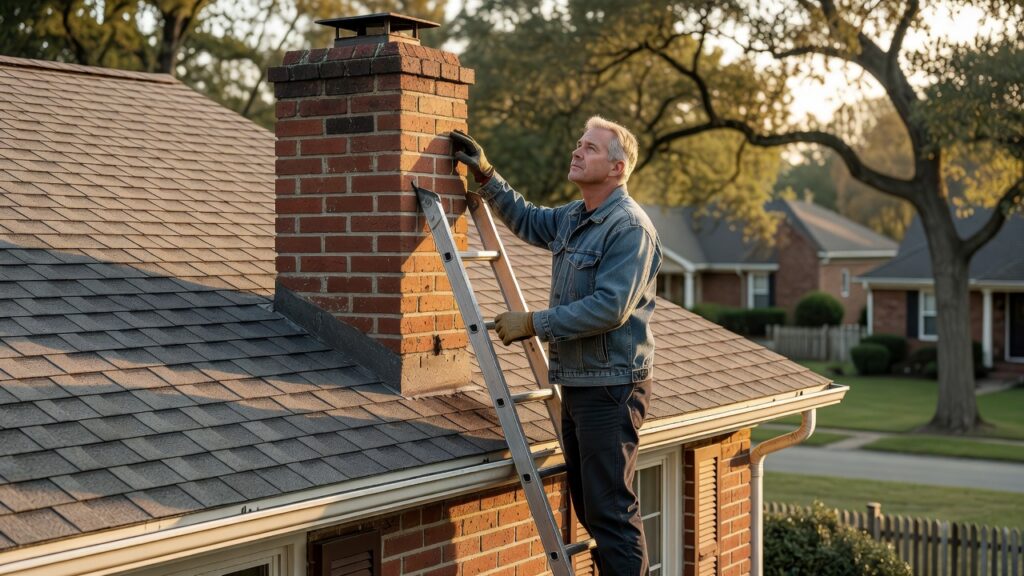
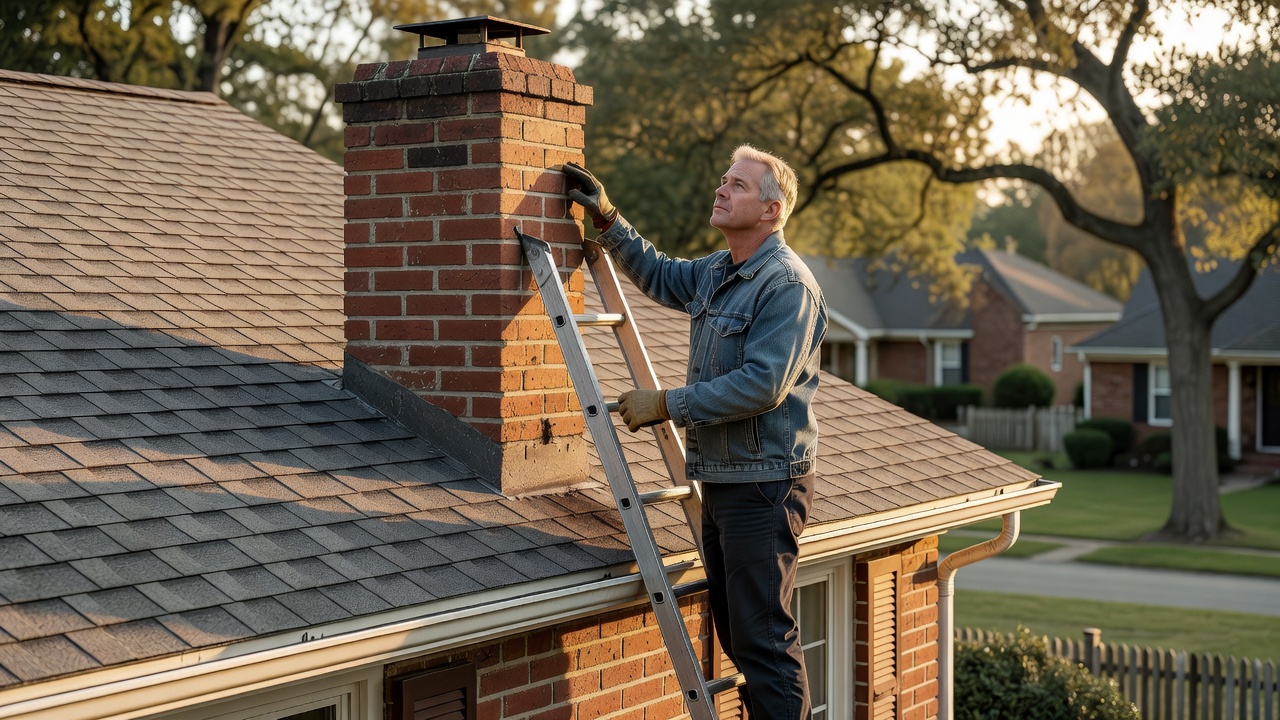
Observe the Exterior Masonry
Walking around the property and looking at the visible chimney is a useful seasonal habit.
Pay particular attention to cracks, spalling, deteriorated mortar, or areas where water appears to be entering.
Finding a problem early gives you more time to have it evaluated before moisture exposure and weather cause additional deterioration.
Where DIY Chimney Work Becomes Risky
The line becomes much clearer when the work involves the chimney’s interior, combustion gases, or structural components.
Creosote Removal
Creosote is a combustible deposit produced by wood combustion. It can accumulate inside a chimney or flue when smoke and combustion by-products condense on cooler surfaces.
The amount and condition of deposits vary depending on the appliance, fuel, installation, and burning practices.
CSIA recommends cleaning masonry fireplaces when soot buildup reaches approximately 1/8 inch, or sooner if glaze is present. (csia.org)
A homeowner should not assume that a quick visual check from the fireplace opening tells the whole story. Deposits can be difficult to see in portions of the flue that are not readily accessible.
If you have significant buildup, glazed deposits, or a chimney that has not been inspected recently, professional cleaning and inspection are appropriate.
Flue Liner Inspection
The flue liner is an important part of the chimney system because it helps contain combustion products and protect surrounding construction from heat and gases.
A flashlight cannot reliably identify every problem inside a flue.
Depending on the circumstances, a professional may recommend a more detailed inspection that includes video examination of the chimney interior.
A Level 2 inspection is required under NFPA 211 in certain circumstances, including when there has been a change in the appliance, fuel type, or flue configuration, or when a Level 1 inspection indicates a previously undetected hazard. The applicable inspection level depends on the circumstances. (csia.org)
A chimney fire is another situation that warrants professional evaluation because the event may damage the flue or other components even when the damage is not immediately visible.
Repointing and Chimney Crown Repair
Chimney masonry repairs are more complicated than they may appear.
Mortar needs to be appropriate for the masonry and the application. An improperly selected or installed mortar can contribute to masonry deterioration rather than solving it.
The same applies to crown repairs. The crown needs to shed water and protect the top of the chimney from moisture penetration.
If you see significant cracks, missing mortar, spalling bricks, or deterioration around the crown, have the chimney evaluated before attempting a repair.
Gas Fireplace and Gas Appliance Work
Gas appliances require particular caution.
Work involving gas piping, appliance connections, burners, controls, venting, or other gas components should be performed by appropriately qualified professionals and in accordance with applicable New Jersey requirements and the appliance manufacturer’s instructions.
Do not attempt to modify gas connections simply because the component appears accessible.
If a gas fireplace is not operating correctly, contact a qualified professional who is authorized to service that type of appliance.
Chimney Liner Installation or Replacement
Installing or replacing a chimney liner is not a basic DIY project.
The liner must be appropriate for the appliance and fuel type and installed according to the applicable installation requirements and manufacturer’s instructions.
Improper liner work can affect draft, combustion-gas venting, clearances, and fire safety.
If you believe your chimney needs relining, have the system professionally evaluated first.
Why Improper Chimney Work Can Be Dangerous
The biggest concern with chimney work is not simply whether the repair looks good.
A chimney must safely contain and exhaust combustion gases while maintaining appropriate separation from combustible building materials.
A damaged liner, blocked flue, or improperly repaired chimney can interfere with that function.
Carbon monoxide is particularly concerning because it is colorless and odorless. EPA recommends having chimneys, flues, and fuel-burning appliances inspected by qualified professionals and keeping them free of blockages. (epa.gov)
Carbon monoxide detectors are an important safety measure, but they should complement—not replace—proper appliance and chimney maintenance.
What About Chimney Fires?
Creosote is combustible, which is one reason chimney maintenance matters.
EPA explains that creosote can accumulate in chimneys and that burning wood improperly can increase smoke and creosote production. Using dry, seasoned firewood and operating the appliance correctly can help reduce deposits. (epa.gov)
If you believe a chimney fire has occurred, do not simply clean the chimney and resume using the fireplace.
Have the chimney and appliance evaluated by a qualified professional before using them again. Heat from a chimney fire can damage components that may not be obvious during a basic visual inspection.
Do DIY Repairs Affect Your Fireplace Warranty?
Do not assume that every manufacturer warranty permits homeowner modifications or repairs.
Factory-built fireplaces and other listed appliances have specific installation and maintenance requirements. Warranty terms vary by manufacturer and product.
Before modifying a prefabricated fireplace, check the manufacturer’s installation and warranty documentation. When in doubt, have the work performed by a qualified professional familiar with the appliance.
Keep inspection, cleaning, and repair documentation for your records.
What Happens During a Professional Chimney Inspection?
A professional inspection is different from a homeowner’s visual check.
The inspection level depends on the condition of the system, its history, and whether there have been changes or suspected problems.
A Level 1 inspection generally covers readily accessible portions of the chimney and appliance and is appropriate when the system is being used as intended and there are no known changes or suspected hazards.
A Level 2 inspection is more extensive and includes examination of the flue interior, typically using video scanning when appropriate.
CSIA explains that the inspection level should correspond to the circumstances and that a more detailed inspection may be necessary when conditions indicate a potential problem. (csia.org)
How Much Does a Chimney Inspection or Cleaning Cost in Clementon?
Chimney service prices vary according to the type of chimney, accessibility, amount of buildup, inspection level, and whether repairs are needed.
Rather than publishing an unsupported fixed Clementon price range, ask the contractor what is included in the quoted price.
Before scheduling, find out:
- Whether the price includes an inspection
- Whether chimney sweeping is included
- Which inspection level is being performed
- Whether video scanning is included when required
- Whether removal of the existing cap or debris is included
- Whether repairs are priced separately
- Whether there are additional access or service charges
Two companies can quote different prices while providing different scopes of work, so comparing the actual services is more useful than comparing numbers alone.
What Clementon Homeowners Can Do Safely
The practical division is straightforward.
Reasonable homeowner maintenance:
- Remove ash from a cool firebox
- Operate the damper
- Clean fireplace glass according to manufacturer instructions
- Observe visible exterior masonry
- Look for obvious damage or animal activity
- Keep the area around the fireplace clear of combustible materials
Call a professional for:
- Chimney sweeping when significant deposits are present
- Creosote removal
- Flue liner inspection or repair
- Chimney relining
- Crown repair
- Significant masonry repair
- Chimney fire evaluation
- Persistent smoke problems
- Suspected chimney obstruction
- Gas appliance or gas-line service
- Problems involving combustion-gas venting
The goal is not to prevent homeowners from maintaining their fireplaces. It is to avoid turning a manageable maintenance issue into a safety problem.
Schedule a Chimney Inspection in Clementon, NJ
If you live in Clementon or the surrounding Camden County communities, regular chimney maintenance can help identify problems before you need the fireplace most.
Barrington Chimney serves Clementon, Gloucester Township, Voorhees, Lindenwold, and surrounding South Jersey communities.
If you are unsure when your chimney was last inspected or cleaned, contact Barrington Chimney to schedule an evaluation. A professional can determine what your chimney needs, explain which repairs are necessary, and help you understand which maintenance tasks you can safely handle yourself.
Related from Barrington Chimney: Chimney Cleaning in Barrington, NJ
Areas we serve
Barrington, NJ · Barrington, NJ · Barrington, NJ · Barrington, NJ · Barrington, NJ