
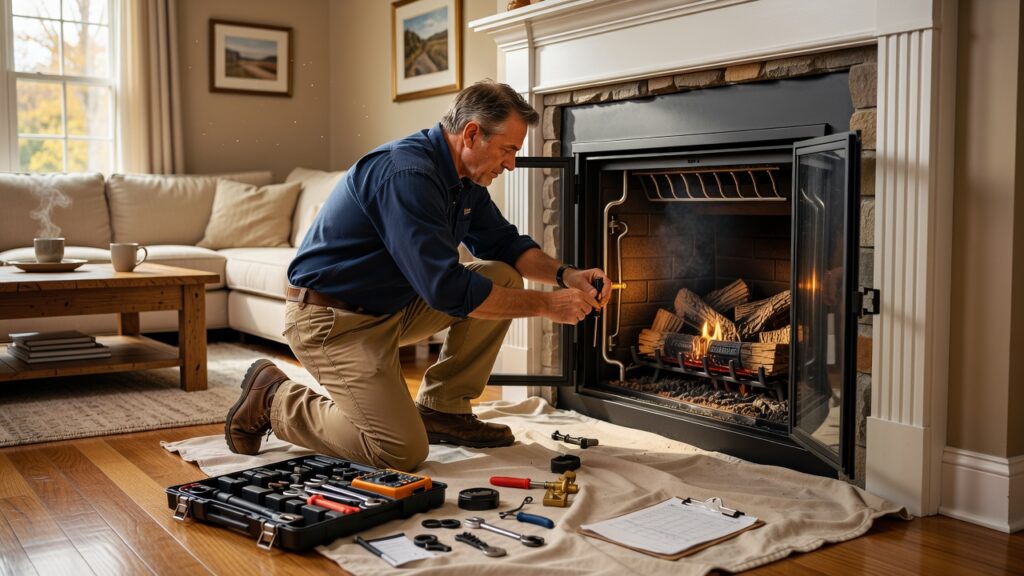
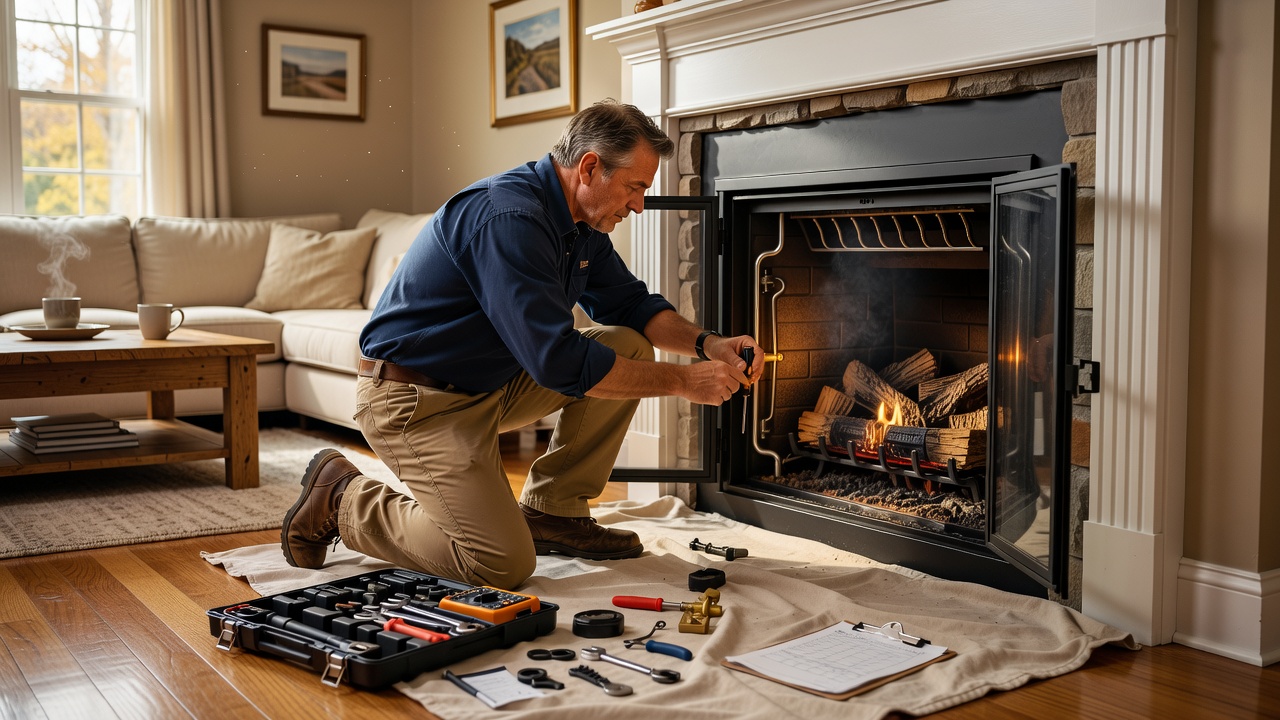
Gas Fireplace Service in Barrington and Runnemede, NJ: What the Job Actually Looks Like
Most gas fireplace problems don’t announce themselves. The pilot light keeps relighting, the flame looks more or less normal, and the unit runs through another South Jersey winter without anyone thinking twice. Then a technician opens it up and finds a cracked burner, a thermocouple reading out of spec, or a venting connection that’s been slowly leaking combustion gases into a Runnemede living room for two seasons. Annual gas fireplace service is how you catch those problems before they become a carbon monoxide emergency. Here’s what the process actually involves, start to finish.
Before You Start
Clear a three-foot working area around the fireplace. Remove any decorative items from the hearth. If your unit has a gas shutoff valve behind a decorative panel or on the wall nearby, know where it is before the technician arrives. You may be asked to confirm that it is accessible.
Check your manufacturer documentation if you have it. The make, model, and installation year help a technician pull accurate specifications. Many Runnemede homes have insert units retrofitted into older masonry fireplaces. Knowing which type you have, whether freestanding, insert, or built-in, saves time at the appointment.
Expect the visit to take 60 to 90 minutes for standard annual service on a single unit. More involved repairs or older appliances can take longer.
Step 1: Shutoff and Visual Assessment
The technician starts with the gas supply. The unit is shut off at the appliance valve, and on most service calls in Barrington and the surrounding Camden County area, the technician will also confirm that the main line valve is accessible before proceeding.
From there, the technician performs a thorough visual inspection of the firebox interior, including the glass, gaskets, ceramic logs or decorative media, burner assembly, and ignition system.
This is where obvious issues often show up first: discolored glass that won’t clean off, logs shifted out of position, pilot assemblies with visible corrosion, or media that’s crumbling after years of heat cycling.
NFPA 54, the National Fuel Gas Code, establishes baseline requirements for gas appliance installation and safety. A technician who works according to applicable standards is better positioned to identify problems that a basic cleaning might miss.
Step 2: Burner and Ignition System Check
The burner ports are inspected for blockage or corrosion. Blocked ports can change the flame pattern and contribute to incomplete combustion.
On older units common in late-1980s and 1990s Runnemede housing stock, cast-iron burners can develop hairline cracks that aren’t obvious until the unit is running.
The ignition system, whether your unit uses a standing pilot, intermittent pilot, or electronic ignition, is tested for reliable operation. The thermocouple or thermopile may also be tested with appropriate diagnostic equipment. If a component is producing readings outside the manufacturer’s specifications, the technician can recommend replacement before it causes a no-heat call in January.
This is also when the technician checks the remote receiver or wall-switch wiring if your unit has one.
Step 3: Venting Inspection
Gas fireplaces use either a direct-vent or B-vent configuration. Both require inspection of the vent system from the firebox to its termination point. For direct-vent systems, that typically means the exterior wall termination. For B-vent systems, it generally means the roof termination.
The technician checks for proper venting, blocked termination caps, bird nests or other debris, deteriorated vent components, and proper clearances at penetrations.
A venting problem is one of the most serious findings on a gas fireplace service call. Improper venting can allow combustion gases to accumulate in living spaces.
If your home doesn’t have carbon monoxide detectors on every level, the technician should recommend reviewing your CO alarm coverage. Properly placed carbon monoxide alarms provide an important additional layer of protection.
Step 4: Gas Valve and Pressure Test
A manometer check can confirm whether the gas valve is delivering fuel at the manufacturer’s specified inlet and manifold pressure.
Pressure that is too low can contribute to a weak flame and poor combustion. Pressure that is too high can cause the appliance to operate outside its rated specifications and place additional stress on components.
The valve body is also inspected for external corrosion and tested for proper operation if it is a variable-output model.
On some insert units installed in Camden County homes during the 2000s, the ODS, or oxygen depletion sensor, may also be checked. This safety feature is designed to shut the unit down if oxygen levels fall below a specified threshold.
Step 5: Cleaning
The glass is cleaned with a cleaner designed for fireplace ceramic glass. Standard household cleaners can damage or etch the surface.
The firebox interior is vacuumed to remove dust and debris. Logs and decorative media are repositioned according to the manufacturer’s specifications if they’ve shifted. Proper log placement directly affects flame appearance and combustion.
Burner ports are cleared with an appropriate soft brush. If the unit has a blower, the blower wheel and housing may also be cleaned. Dust buildup on a blower can reduce airflow and increase motor wear.
Step 6: Operational Test and Final Verification
The gas supply is restored, and the unit is run through a full startup cycle. The technician observes the flame across the burner, checks for delayed ignition or other abnormal operation, and confirms that the blower activates at the appropriate temperature.
Any fault codes on electronic ignition systems are documented. If your remote thermostat is included in the service scope, it can also be tested and calibrated as needed.
Step 7: Report and Recommendations
At the end of the visit, you should receive a written summary explaining what was inspected, what was cleaned, what was found, and what, if anything, needs follow-up.
Vague verbal-only reports are not ideal for a gas appliance service call. A written record gives you a clear reference for future maintenance and repairs.
Expect annual gas fireplace service in the Barrington and Runnemede area to run between $100 and $175 for a standard cleaning and inspection. Repairs beyond that scope, such as valve replacement, thermocouple replacement, or blower motor work, are typically quoted separately.
Replacement parts for common brands such as Heat & Glo, Regency, and Majestic are generally available, although availability can vary by model and appliance age.
Troubleshooting Tip: Flame Color Tells You Something
If your gas fireplace is producing a persistent yellow or orange flame rather than the flame appearance specified in your owner’s manual, don’t assume it’s only a cosmetic issue.
A change in flame appearance can indicate a combustion or appliance problem, such as a blocked burner port, venting restriction, or air-shutter issue. Because combustion problems can increase carbon monoxide risk, shut the unit down and have it inspected before using it again if the flame is consistently abnormal.
Gas fireplace service isn’t complicated when a qualified technician performs it with the right tools and follows the manufacturer’s requirements. The problem is skipping it. One season becomes three, and by the time something fails, you’re looking at a mid-winter repair instead of a routine annual checkup.
Barrington Chimney serves Runnemede, Barrington, and the surrounding Camden County area. Contact us to schedule your gas fireplace inspection. We offer free initial inspections so you can understand the condition of your system before any work begins.
Related from Barrington Chimney: Chimney Sweep Services in Barrington, NJ · Chimney Cleaning in Barrington, NJ · Chimney Repair in Barrington, NJ