
Don’t Wait Until It Leaks: When to Install a Chimney Cap in Barrington, NJ
Most Barrington homeowners don’t think about their chimney cap until something goes wrong. A starling nests inside the flue. Rain runs into the firebox after a nor’easter. The damper begins to rust. By that point, what could have been a simple installation has become a repair project, and the cost reflects that.
Chimney cap installation in Barrington, NJ is important year-round, but the timing of when you schedule it can affect what you pay, how long you wait for service, and what condition the chimney is in when the work begins.
This guide explains the best time to install a chimney cap, what you can reasonably handle yourself, and when it’s best to hire a CSIA-certified chimney sweep.
Why a Chimney Cap Matters More in South Jersey Than You Might Expect
Barrington sits in Camden County, about 12 miles southeast of Philadelphia. The region has a humid subtropical climate with cold winters, creating conditions that make a properly fitted chimney cap especially important.
Freeze-thaw cycles are one of the biggest concerns. When water enters an uncapped flue, it saturates the clay tile liner and surrounding mortar. Temperatures in Barrington regularly fall below freezing overnight from December through February, and sometimes into March. As the trapped water freezes, it expands, gradually cracking clay tiles and damaging mortar joints.
The NFPA 211 standard makes it clear that a compromised flue liner is a fire and carbon monoxide hazard, not simply a cosmetic problem.
Moisture isn’t the only concern. Barrington’s mature pine and oak trees also mean leaves, twigs, birds, and squirrels frequently find their way into uncovered chimneys. A chimney without a cap is essentially an open invitation for nesting animals, and nesting materials are a documented fire hazard.
Nationally, chimney cap installation typically costs between $150 and $500, depending on the flue configuration and cap material. Stainless steel caps, which the CSIA recommends over galvanized steel because they last longer in humid coastal climates, usually fall toward the higher end of that range. Multi-flue caps generally cost more.
For most Barrington homeowners, a fair price for a professionally installed single-flue chimney cap, including a Level 1 inspection, typically ranges between $200 and $450.
Season by Season: When to Book, When to Wait, and When It’s Urgent
Fall (September through November) Is the Best Time
This isn’t a coincidence.
Fall is the season most chimney professionals recommend because it comes just before fireplaces return to regular use and because weather conditions are generally ideal for roof work.
A chimney sweep can install the cap, inspect the crown and flue liner, and confirm everything is ready before your first fire of the season.
Demand increases significantly in October, so scheduling in September often helps homeowners avoid the two-to-three-week wait that’s common throughout Haddonfield, Audubon, Mount Ephraim, and nearby communities.
Winter (December through February) Is Possible but More Challenging
Chimney caps can absolutely be installed during winter, especially when an existing cap is damaged or blown off during a storm.
However, frozen mortar doesn’t cure properly. If the chimney crown also requires repairs, that work may need to be delayed or completed using specialized cold-weather materials.
If your chimney cap is missing during wet or freezing weather, don’t wait. A qualified chimney company can determine what can safely be repaired immediately and what should wait until temperatures improve.
Spring (March through May) Is the Second-Best Time
After months of heavy fireplace use, spring is an excellent time to schedule both a chimney inspection and chimney cap installation.
The CSIA recommends annual chimney inspections, making spring an efficient time to address any issues discovered during the heating season.
Spring weather in Camden County is generally favorable, contractor schedules are more flexible than in fall, and you’ll have plenty of time to complete any additional repairs before the next heating season.
Summer (June through August) Offers the Most Flexibility
Most homeowners aren’t thinking about their chimneys during summer, which actually makes it a smart time to schedule maintenance.
Summer is typically the slowest season for chimney companies throughout South Jersey. Scheduling is often easier, and some contractors may offer more flexible pricing.
The trade-off is the heat. Roof work during a Barrington summer can be demanding, and many technicians can work more comfortably and efficiently during the cooler temperatures of spring or fall.
If budget and scheduling flexibility are your priorities, summer is a practical option. If ideal working conditions matter more, fall remains the preferred season.
What You Can Handle Yourself (Honestly)
There are a few chimney cap maintenance tasks that homeowners can safely perform.
Inspecting the chimney cap from the ground with binoculars after a storm is perfectly reasonable. If you notice rust, damaged mesh, or a cap that appears loose or missing, that information can help your chimney professional prepare before arriving.
You can also clear light debris around the chimney base, check that the fireplace damper opens and closes properly, and inspect the firebox for obvious water stains or fallen mortar.
These simple observations can make an inspection more efficient.
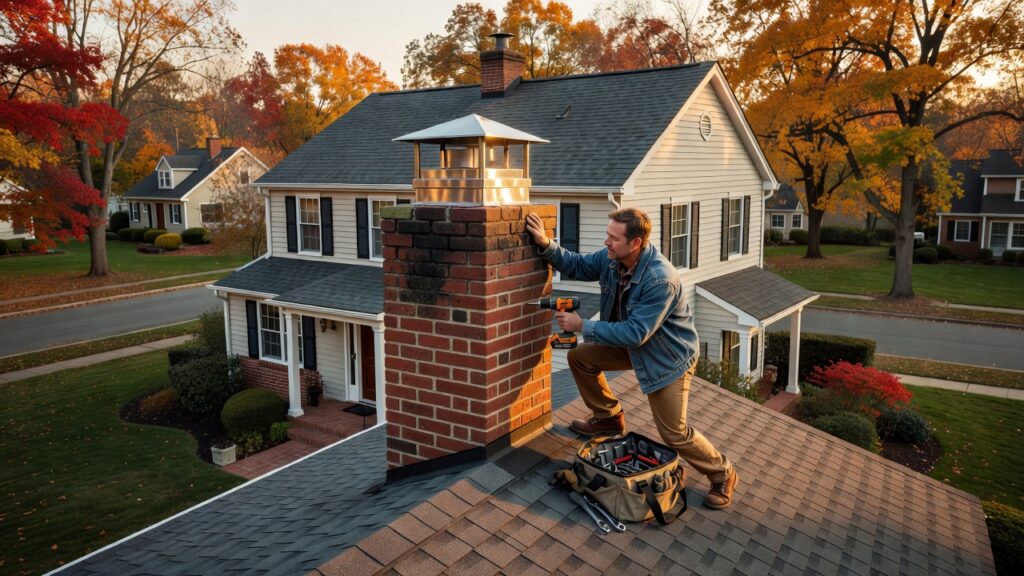
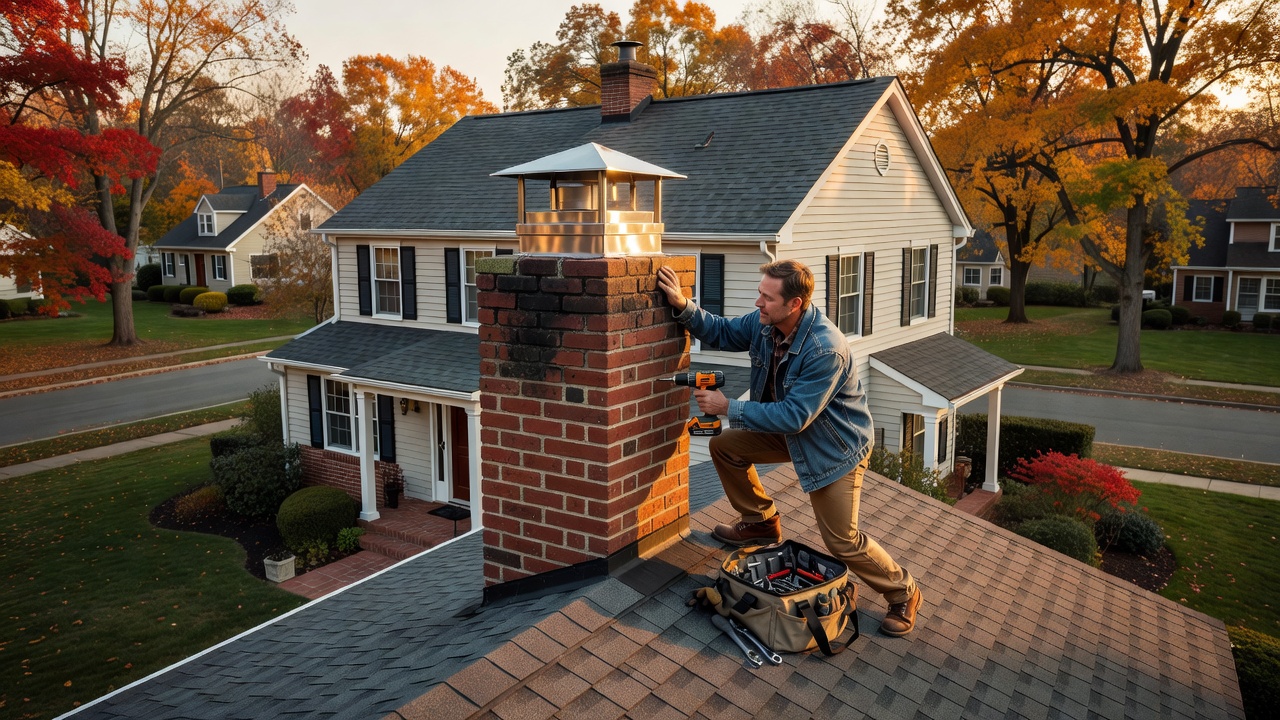
What you shouldn’t do is climb onto the roof to replace a chimney cap yourself.
Many Barrington homes, particularly older Colonial and Cape Cod styles, have roof pitches that create a genuine fall hazard.
Beyond safety concerns, proper chimney cap installation requires accurate flue measurements, and many installations require sealing the cap to the chimney crown with refractory mortar. A poorly secured cap can become airborne during strong winds.
The CSIA recommends that chimney cap installation be performed by a qualified chimney professional.
Professional installation also creates an opportunity to identify other hidden issues, including cracked flue liners, deteriorated dampers, or early signs of animal nesting. Saving a few hundred dollars by skipping a professional inspection can sometimes lead to repair costs well into the thousands later.
What Happens When You Wait Too Long
Spending an entire winter without a chimney cap allows water to repeatedly enter the flue.
Homeowners in Cherry Hill and Voorhees who postpone cap installation often discover the same pattern: damaged flue tiles, deteriorated chimney crowns, and rusted damper components.
None of these repairs are quick or inexpensive.
Animal intrusion creates another problem.
Starlings and chimney swifts frequently nest inside uncapped chimneys. Once chimney swifts establish a nest, federal migratory bird protections apply, meaning the nest cannot legally be disturbed until the nesting season ends.
A missing chimney cap can quickly turn into a months-long problem.
Schedule a Thorough Inspection Before the Fall Rush
Barrington Chimney proudly serves homeowners throughout Barrington and surrounding Camden County communities, including Haddon Township, Collingswood, Lawnside, and Runnemede.
If your chimney cap is missing, damaged, or was never installed on an older home, the best time to address it is before the fall rush creates longer scheduling delays.
Contact us today to schedule your free chimney inspection. We’ll inspect your chimney, measure the flue, evaluate your current cap, and provide a straightforward recommendation based on your chimney’s condition.